
What a Professional Editor Notices That You Don't
Discover the hidden details professional editors catch that most teams miss. Learn how branded content video editing shapes emotion, rhythm and brand Identity. Poput helps agencies and producers elevate every frame..
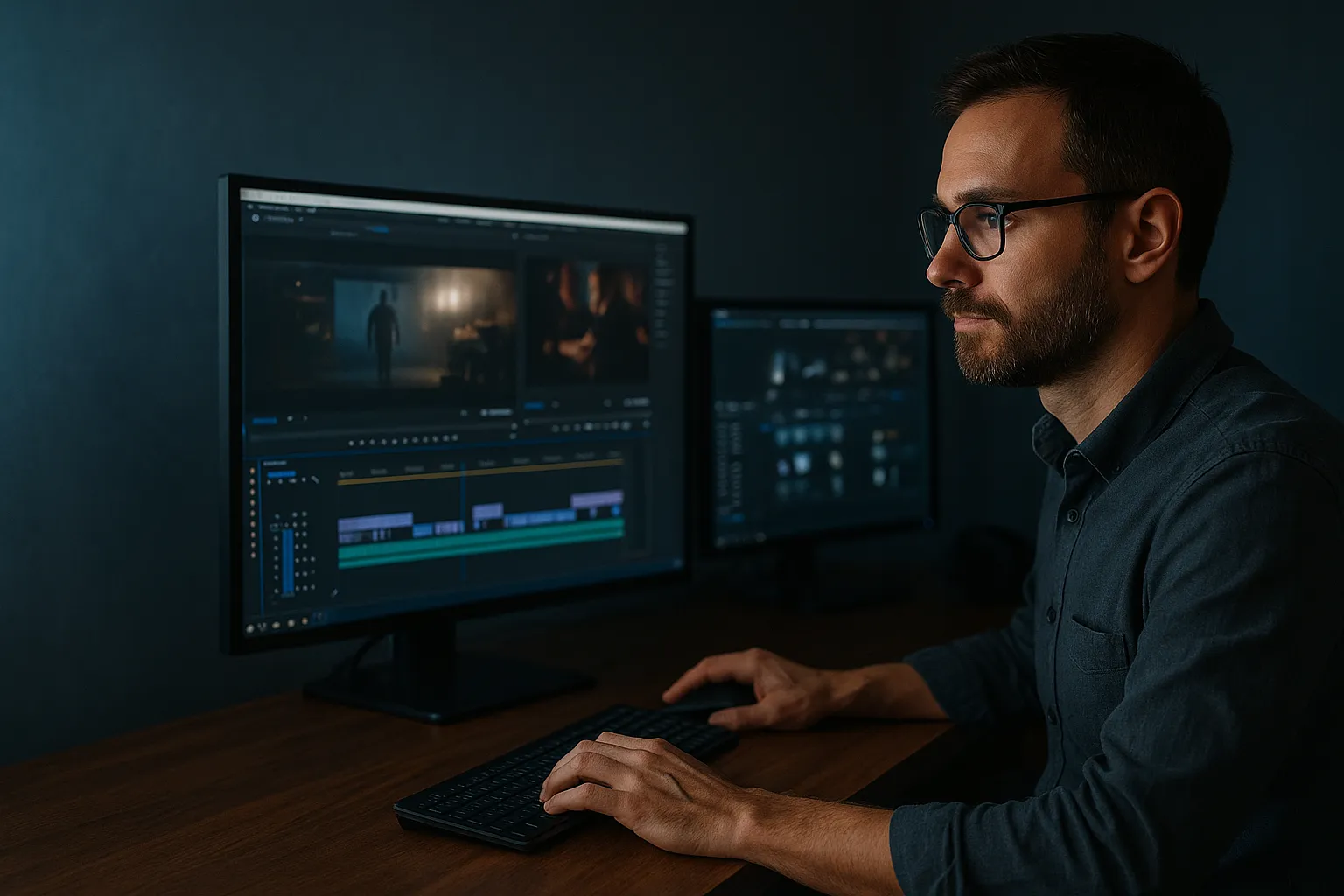
In branded content video editing, the difference between a good cut and a great one isn’t software or plug-ins. It’s perception.Professional editors don’t just assemble footage. They interpret emotion, rhythm, and brand identity with surgical precision. Often see things that others simply overlook.For video producers, agency owners, and senior editors, understanding what professionals notice (and training your junior staff to see it too) can save weeks of revisions, tighten delivery timelines, and drastically improve client satisfaction.This article draws from current research, professional workflows, and Popcut’s own experience in video editing and branded storytelling.
Why Branded Content Video Editing Is About Perception, Not Just Precision?
Viewers can’t always explain why a video feels off. It’s something that they feel instantly. Professional editors anticipate those emotional disconnects and fix them before anyone else spots them.
Recent data backs this up:
- 91% of businesses now use video marketing across their channels.¹
- Videos with strong sound design and rhythm are 3–4x more immersive than videos with little or no audio work.²
- Short-form edits under 90 seconds deliver the highest viewer retention, especially for brand storytelling.³
These findings highlight that editing is as much psychology as technique. The goal is not just to show a brand. You have to make viewers feel aligned with it.What seasoned editors instinctively consider:
:Viewer psychology: Where will attention dip? How can pacing pull it back?
Brand tone: Does the style reflect the company’s identity and values?
Narrative flow: Is every shot driving the story? Is it merely there for decoration?Emotional timing: Does the cut land when the emotion peaks, not just when dialogue ends?
The Hidden Layers a Professional Editor Sees Instantly:
- Micro-Pacing and Rhythm
Professionals think in frames, not seconds. They sense when a cut lingers two frames too long or lands a beat too soon.Try this: Mute the video and check if the pacing still feels right visually. This helps junior editors rely on rhythm rather than dialogue timing alone.
- Emotional Continuity
A technically perfect cut can still feel wrong. Professionals track emotion across every shot. They adjust reaction shots, sound cues, and pacing to preserve tone.
Ask:Is each cut emotionally consistent with the story arc?Are transitions enhancing or interrupting the mood?
Is the soundscape supporting the message? Or is it overwhelming it?
Example: If a testimonial about trust cuts abruptly to a chaotic handheld shot, the emotion breaks, even if the framing is flawless.
3**. In The Story Economy: The Power Is Subtraction**
Editors new to branded work often feel obligated to use every “good” shot. Professionals know better: restraint makes storytelling elegant.They ask:
Does this shot really advance meaning? Or just extend runtime?
Can the audience grasp the story faster if we trim this?What is the simplest visual that communicates emotion clearly?
Research insight: Structured, multi-pass reviews reduce re-edits and improve clarity.⁴ Use one pass for structure, one for emotion, and one for technical polish.
- Sound Design: The Invisible Art
In good video editing, sound defines professionalism. Studies show that full sound design increases emotional engagement up to fourfold.²
Checklist for junior editors:
Balance dialogue, music, and effects. No one element should compete.EQ interview tracks to remove muddy mid-tones and hiss.
Add room tone between cuts to smooth transitions.Layer ambient effects (office hum, city noise, nature beds) for realism.Even subtle audio layers add polish that the viewer can’t explain. It is something that the viewer always feels.
- Brand Consistency in the Edit
A professional edit reflects brand identity at every level. They make sure it is consistent in the color palette, pacing, and even transition style.
For instance:
A luxury brand requires smoother dissolves, minimal motion graphics, and deliberate pacing.A tech brand favors sharper cuts, bold typography, and motion energy.
Action step: Create a “brand editing bible” with tone, transitions, type treatments, and LUTs. This keeps junior editors consistent and speeds client approvals.⁵
How to Train Your Team to See Like a Professional Editor:
- Watch Critically, Not Passively
Encourage editors to pause commercials and branded films frequently and ask:Why did the editor cut there?
What emotion drives this sequence?
How does this transition change pacing?
This builds muscle memory for rhythm and narrative instinct.
- The Three-Pass Review System
Research confirms that structured post-production reviews save time.⁴
Use this framework:Story pass: Focus on message clarity.
Emotional pass: Watch for tonal consistency and rhythm.
Technical pass: Correct audio, graphics, and color.
- Create a Brand Style Bible
Each client should have a living document detailing:Preferred pacing and tone (fast, cinematic, relaxed).Logo animation duration and sound cue.Motion graphic templates and color rules
.Caption hierarchy and font system.
Agencies that document brand rules early cut revision rounds by up to 30%.⁵
- Encourage Frame Discipline
Senior editors don’t “eyeball” cuts. They take it frame-by-frame. Teach your team to:
Use markers and snapping for exact sync.Compare cut timing ±1 frame to learn the difference.Rewatch scenes on loop and adjust micro-pacing.
This habit trains visual precision. Visual precision is the foundation of professional editing.
- Build a Feedback Culture
Constructive critique accelerates skill growth.Best practices:
Start feedback with what works.
Be specific (“The pacing at 1:20 feels slow; tighten by two beats.”).
Reference professional examples (e.g., Nike, Wistia).⁶
Require rationale for each edit decision. Always include the“why” to build awareness.
The Popcut Approach: Editing Beyond the Timeline
At Popcut, we see editing as brand communication, not decoration.Our team's approach to branded content video editing with three guiding principles:
Intentionality: Every cut has purpose.
Efficiency: Fewer revisions through a structured process.
Emotion: Edits that feel authentic, not mechanical.
We apply the same rigor to every video we edit, where pacing, tone, and clarity define brand perception.
Common Mistakes Junior Editors Make (and How to Fix Them)
Mistake Fix Overusing transitions
Use transitions for emotional shifts, not every cut.Ignoring audio hygiene
Clean, normalize, and EQ before adding music.Relying on music to carry emotion
Make visuals work on mute first.
Cutting to script, not emotion
Let the feeling dictate timing.
Forgetting viewer experience
Edit for audience attention span, not the reel.
Checklists for Faster, Smarter
Post-Production: Pre-Edit Checklist:
Footage labeled and organized per naming convention.Selects tagged (A/B/C quality).Interviews cleaned and leveled.Brand assets (logos, LUTs, fonts) imported.
Junior Editor Polish Checklist Dialogue
Normalized to ~-12 LUFS.
Room tone between dialogue cuts.Music ducked under dialogue
.Captions synced accurately
.Frame-level pacing confirmed.
Export with proper codec, color space, and metadata.
Senior Editor Client-Review Checklist
Story structure and tone locked.
Three key emotional beats verified.Short-form (15/30/60s) versions prepped.³
Version naming standardized (e.g., Project_v3_KA_20251028).
Time-stamped revision notes prioritized by impact.Implementing these checklists, which can be adapted from professional workflow guides⁴.
Helps to reduce revisions, saves time, and builds consistent output across teams.
Training Exercises for Junior Editors Frame Discipline Drill:
Re-cut a 30s sequence three times (+1 frame, -1 frame).
Review emotional differences.Sound Blindness Session: Watch muted, note pacing.
Then rewatch with sound—compare mood shifts.15/30/60 Sprint: From a 90s master cut, make 15s and 30s versions.
Practice identifying core beats.Brand Match Audit: Compare the current edit to top-performing client videos. Identify mismatches in pacing, color, or tone.
Why Senior Editors Save Everyone Time:
Seasoned editors know what not to tweak. They balance creative instinct with process discipline.Their real value isn’t just technical. Their real value is in their efficiency. They protect project timelines, uphold consistency, and mentor juniors to think strategically.They encourage junior editors to document changes, use version naming consistently, and submit concise time-coded notes. Structured communication saves entire review rounds.
Final Thoughts: Editing Is Leadership
In modern branded content, editing shapes brand voice more than any other discipline. A professional editor doesn’t just make footage look good. They make it mean something.And that awareness? That’s thePopcut difference.
Ready to Elevate Your Next Project?
Looking to hire a video editor who understands brand, rhythm, and emotion?Popcut connects you with top-tier post-production talent skilled in branded content video editing and corporate video editing that drives measurable impact.
👉 Book a call with us on Popcut.comto learn more about our editorial process and how we help agencies and brands tell stories that move people.
.References
- HubSpot – 2024 Video Marketing Report.
- Kock, M The Power of Sound Design in a Moving Picture Social Media Today
- Short-Form Video Completion Rates 2024
- Filestage & SimonSays – Post-Production Workflow Guides
- Riverside – Building Brand Consistency in Video Editing
- Wistia – Customer Story Editing and Brand Storytelling