
Emerging Trends in Video Editing: The Next 1-2 Years
Emerging trends in video editing are transforming how brands create, collaborate, and deliver content. Discover the next 1–2 years of innovation—from AI-assisted workflows to cloud-native editing, real-time collaboration, immersive formats, and the rising demand for high-quality short-form video.
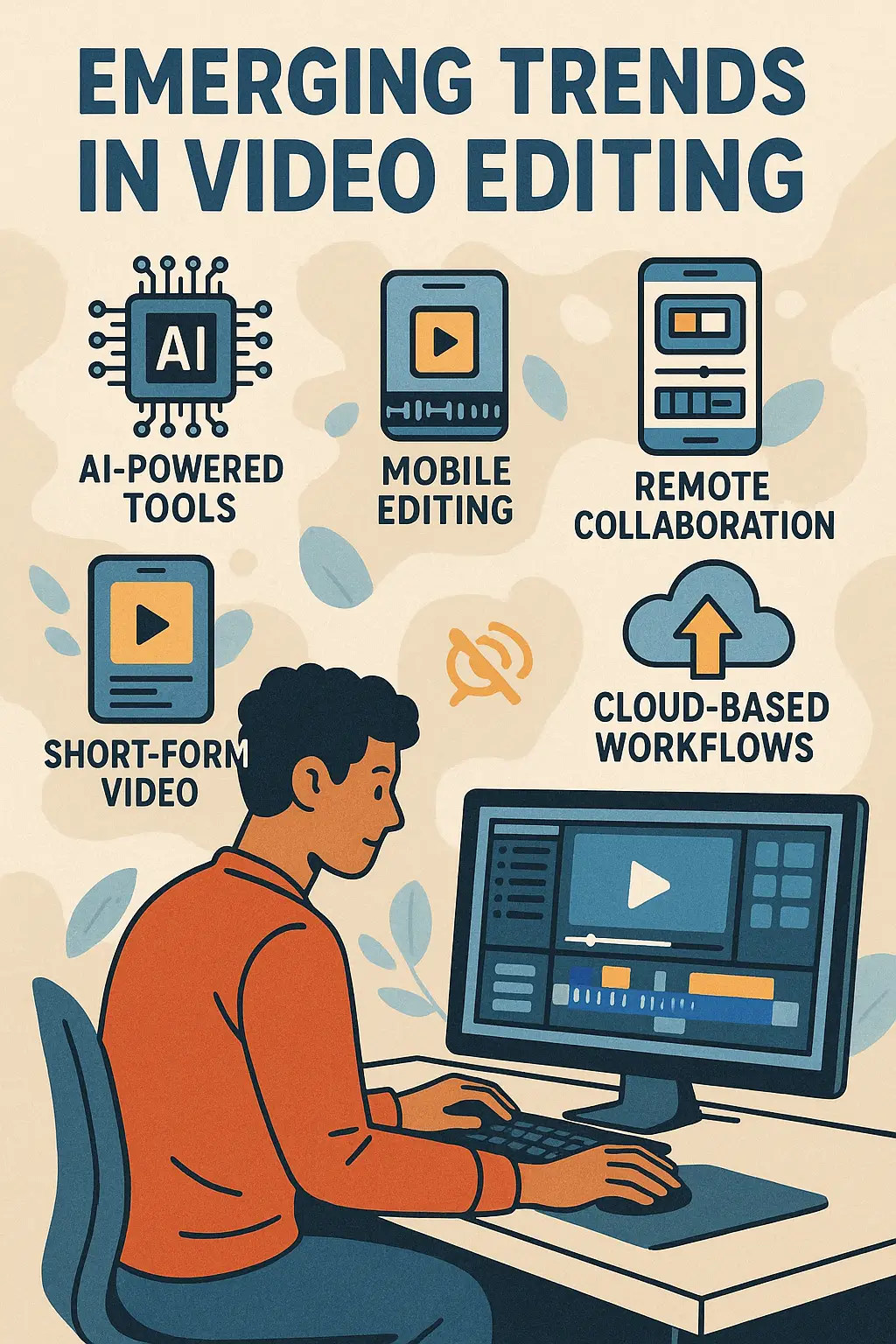
Video editing is evolving at a breakneck pace, driven by new technologies and changing audience behaviors. For mid- to senior-level creatives and agency executives, staying ahead of these trends is key to delivering impactful content. In this forward-looking overview, we explore the most important emerging trends in video editing. In this article, we take a look at all the new software available from AI-assisted workflows and cloud collaboration to stylistic shifts in pacing and format. We also look at what the industry can expect in the coming 1-2 years. We’ll cover how these trends manifest in advertising/marketing content as well as in broader film, TV, online video, and corporate production, drawing insights from around the globe.
How technology is quickly transforming editing
AI-Assisted Editing Becomes Mainstream: Artificial intelligence is rapidly transforming video editing by automating tedious tasks and offering creative assistance. Modern editing software now integrates AI for functions like auto-cutting, color correction, and even suggesting edits. For example, Adobe’s latest tools use generative AI to extend video clips or turn images into footage. These are features that allow editors to fill gaps or adjust timing without reshoots. AI can also analyze video content to recommend transitions or music that fit the mood. These capabilities free editors from rote work, speeding up workflows and improving efficiency In advertising, this means quicker turnaround on high-volume social content, while in film/TV post-production AI helps with tasks like automatic scene detection or dialog transcription. Notably, AI is lowering the barrier to entry for newcomers by handling complex tasks that once required years of experience. However, professionals caution that while AI makes editing faster, it doesn’t automatically make the edits better. Things like human creativity and judgment remain irreplaceable.
Cloud Collaboration and Remote Workflows: The rise of distributed teams and remote editing pipelines is another major shift. Cloud-based editing platforms and project sharing have matured, allowing editors and motion graphics artists to work together from anywhere in real time. Leading NLEs (non-linear editors) have introduced robust cloud collaboration features – for instance, DaVinci Resolve and Adobe Premiere now support shared projects via the cloud, locations. storage and project syncing mean that an agency’s editor in New York can be cutting the same footage as a freelancer in London or Mumbai with minimal delay. This not only boosts efficiency but also reduces the need for physical hardware and travel. In fact, cloud workflows are gaining significant traction in the industry, valued for their scalability and remoteaccess. The push toward cloud editing was accelerated by the pandemic and continues to remain a strong practice. Even among major post-production houses and creative agencies who now treat remote collaboration as a default. As a side benefit, cloud workflows can support sustainability goals by cutting down on shipping drives or flying teams around.
Expanded Toolsets (Without Tool Bias): Editing software companies are racing to equip their tools with cutting-edge features to meet new demands. In the past year, the top NLEs (Premiere Pro, Final Cut Pro, DaVinci Resolve, Avid) each released numerous updates, reflecting an intensely competitivelandscape. Rather than favoring any single software, what matters is the broader pattern: frequent updates are bringing AI-powered enhancements, better GPU acceleration for high-res video, and improved support for new formats like HDR. For example, editors can now easily work with high dynamic range content. This new software makes HDR and wide color gamut is crucial because they are standard in films and high-end corporate videos. We also see more universal format compatibility and codec support, easing collaboration between teams on different tools. The bottom line is that the next two years will see editing software continue to integrate advanced tech (AI, cloud, VR/AR capabilities) while streamlining usability, enabling editors to focus more on story and less on technical hassles.
Interactive and Immersive Video: Another emerging technology trend is the rise of interactive and immersive video formats. Interactive videos are becoming more popular. This is where viewers can click, choose story branches, or engage with on-screen elements. They are increasingly gaining momentum for marketing, training, and entertainment purposes. This is fueled by creative tools that allow adding quizzes, clickable hotspots, or branching story logic during the edit. In parallel, 360-degree video and VR content are becoming more accessible to produce and edit. Editors are increasingly called to craft 360° experiences for industries like tourism, real estate, and live events, leveraging the format’s ability to immerse viewers in a scene. While still niche, these immersive formats are expected to grow. In advertising, brands experiment with interactive shoppable videos and AR filters, especially in tech-forward markets in Asia. In film and TV, VR is mostly used for promotional experiences or experimental storytelling. The key trend is that video editors are expanding beyond the flat rectangle frame, preparing for a future where augmented reality (AR) and virtual reality (VR) integration may become a normal part of post-production. Editors who embrace these new formats can create more engaging, participatory content. It is a powerful differentiator as audiences seek novel experiences.
AI and Ethics: What is The Industry Response: With AI’s rapid adoption, creative professionals are also navigating concerns around intellectual property and job security. High-profile debates have emerged over how AI models use footage for training. In 2023, for instance, Adobe faced backlash from creators worried that their content might be used to train AI without consent, prompting Adobe to clarify that customer projects would not feed its AI models. Moreover, as AI editing tools enable outsourcing and automation, editors in major markets voice concerns about fair compensation. There’s a growing awareness that outsourcing to cheaper global markets is driving down rates in the U.S. and Europe, potentially necessitating conversations about labor protections for creatives. Over the next two years, expect industry groups in North America and Europe to push for guidelines on AI usage and perhaps new norms (or contracts) to ensure editors get credit and fair pay when AI plays a role in production. Technological progress is exciting, but creative industries are working to ensure it unfolds in an ethical, sustainable way.
Stylistic Trends in Editing and Content Aesthetics
Technology isn’t the only thing changing. The style and aesthetic of video content is also evolving. Here we look at creative trends in editing rhythms, transitions, color, and formats that are emerging across advertising and entertainment.
Short-Form & Social-Friendly Pacing: The dominance of TikTok, Instagram Reels, and YouTube Shorts has cemented short-form video as a key storytelling format. In 2024 and beyond, editors are increasingly tasked with crafting engaging stories in under 60 seconds. This has driven a trend toward tighter pacing, snappier cuts, and attention-grabbing openings. In short-form edits, every second counts – editors use rapid-fire sequences and bold visuals in the first 3 seconds to hook viewers. Expect to see more creative use of fast-paced montages, jump cuts, and condensed storytelling techniques to deliver maximum impact quickly. This style, born on social media, is now influencing advertising broadly: even brand commercials and corporate videos are adopting quicker rhythms and punchier storytelling to hold short attention spans. At the same time, long-form content (like films or series) is not immune to this influence. They don’t mimic TikTok pacing, trailers and promotional materials for films are cut in ever more frenetic styles, and some filmmakers experiment with brisk editing to appeal to modern viewers. The key stylistic trend is an overall acceleration of pace in many genres, balanced carefully against narrative needs.
Creative Transitions and Effects: Editors today have a deep bag of tricks for transitions, and some classic techniques are enjoying renewed popularity. One such trend is the resurgence of the match cut, a seamless transition linking two scenes via similar composition; it’s become “one of the most popular transitions as of recently,” valued for its eye-pleasing continuity. Jump cuts – once avoided – are now a stylish choice in vlogs, music videos, and ads to convey the passage of time or add jumpy energy. The dolly zoom (the famous “Vertigo effect”) has leapt from cinema history into social videos, used by creators to add dramatic focus or a surreal touch in both short and long-form projects. And the whip pan, a fast camera pan that blurs between scenes, is a favorite for transitioning between topics or locations in a way that keeps momentum These dynamic transitions and effects are increasingly common in marketing content to stand out in the feed. Even high-end productions use them selectively to inject flair or reference a trendy style. Another stylistic flourish is adding motion blur to emphasize speed and movement. This is either captured in-camera or simulated in post. This gives videos a kinetic, energetic feel. In sum, expect the next couple of years to bring even more blend of cinematic techniques and playful effects across content types, as editors draw inspiration from both Hollywood and internet creators to keep audiences glued.
Text and Captions as Design Elements: An essential stylistic component of modern videos is the use of on-screen text, especially captions. With so much content viewed on mobile (often with sound off), burned-in captions and bold text animations are now standard in edits. In 2024, captions aren’t just an accessibility feature; they’re a creative part of the video’s design. Editors are experimenting with typography – from kinetic text that dances with the footage to big, punchy subtitles that emphasize key points. This smartphones is driven by data: 80% of consumers are more likely to watch an entire video if captions are available, and a majority of viewers now watch on.Beyond captions, we see more use ofanimated titles, infographics, and call-outs within videos (especially in corporate and explainer content). Stylized text overlays can convey context quickly or add humor and commentary (as often seen in YouTube vlog editing). For creative directors, the takeaway is that text is no longer an afterthought. Text . integrated into the edit from the start. We can expect continued innovation in how text and graphics meld with footage, creating a richer visual experience that speaks to audiences who consume video on the go.
Aspect Ratios and Format Adaptability: A few years ago, nearly all pro video was 16:9 landscape. Now, editors routinely work in multiple aspect ratios. Vertical video (9:16) and square formats (1:1) have become indispensable, especially for advertising and social campaigns. In the next two years, multi-format editing will be the norm: creative teams will shoot with reframing in mind so that a single campaign yields a horizontal cut for YouTube, a vertical cut for Instagram/TikTok, and perhaps a 4:5 or square for certain platforms. This trend forces editors to think about composition more dynamically. This ensures that key subjects stay in frame when cropped to vertical, for example. Tools with smart reframing (AI that tracks and centers subjects for different aspect ratios) are increasingly used to assist this process. On the high end, even filmmakers experiment with variable aspect ratios (such as IMAX sequences in blockbusters or tall 9:16 footage in documentaries about social media). For creative agencies, proficiency in delivering content optimized to each screen is now a must. The industry consensus is that vertical video is not a fleeting trend but a permanent part of the video ecosystem, given the mobile-first audience.
Color Grading Trends: Color is a powerful storytelling tool, and current grading trends reflect both technology advances and cultural currents. One notable trend is a return of retro and vintage color aesthetics. Such as warm sepia tones, grain, and muted palettes that evoke nostalgia are making a comeback in music videos, indie films, and branded content. This nostalgia trend often comes with a modern twist, blending old-school looks with crisp 4K quality. In contrast, many brands are also embracing “sustainable” color palettes natural, earthy tones (greens, blues, soft neutrals). This is used as a visual nod to environmental values. On the tech side, HDR (High Dynamic Range) mastering is now more widely adopted; editors and colorists have learned to harness HDR for stunning contrast and color vibrancy, especially in big-budget productions destined for HDR displays. As more audiences have HDR-capable screens, we expect even corporate videos and streaming series to demand HDR deliverables, pushing colorists to ensure their workflow can handle the expanded range. Another stylistic approach gaining traction is monochromatic minimalism. Grading an entire piece with variations of a single hue for a stylish, cohesive look. This can be seen in chic commercials or artful short films to create a strong mood. Overall, editors and colorists are experimenting boldly, aided by AI tools that can suggest looks or match grades across shots. The next few years will likely see a duality: on one hand, ultra-realistic colors thanks to HDR and accurate grading, and on the other, creatively exaggerated colors or nostalgic filters to set a tone.
Workflow Changes and Evolving Roles
The way creative teams produce videos is changing alongside technology and style. Workflows are becoming more agile and global, and the role of the video editor itself is expanding.
Distributed Teams and Remote Pipelines: As mentioned earlier, cloud collaboration is enabling fully distributed post-production teams. It’s now common for a commercial being produced in Los Angeles to have editors, colorists, and VFX artists contributing from New York, London, or Bangkok in real time. Post-pandemic, many companies kept remote or hybrid workflows because they proved efficient. This has led to the rise of “follow-the-sun” editing schedules, where an edit can be passed between team members in different time zones to speed up delivery. Production houses are investing in secure remote servers and asset management so that raw footage can be accessed globally. Review and feedback cycles have also gone digital. Using tools like Frame.io (Adobe) or cloud review platforms allow directors and clients to comment on cuts from wherever they are, streamlining approvals. Over the next two years, expect remote workflows to be even more optimized: from improved video conferencing for live editing sessions to cloud-based render farms accelerating exports. One challenge that remains is managing large file transfers for 4K/8K media, but improved bandwidth and proxy workflows help mitigate this. Regionally, remote editing has unlocked new opportunities: a creative agency in Europe might now confidently hire a specialist editor in Asia for a project, or vice versa, broadening the talent pool beyond local hubs.
Global Talent and Outsourcing: With remote connectivity, the post-production talent market has become truly global. Many companies are tapping into cheaper global markets for editing and finishing services, outsourcing tasks like rough cuts, subtitling, or basic VFX to freelance editors abroad. Regions like South and Southeast Asia, Eastern Europe, and Latin America have burgeoning pools of skilled editors who can work at lower rates, and this trend is accelerating. While this allows cost efficiencies and round-the-clock work, it also creates pressure on Western-based freelancers and editors. In fact, the influx of global competition is driving down rates for freelancers in high-cost regions (U.S., Europe). This could spur industry conversations about fair wages and standards to protect creative workers. For senior creative executives, it will be important to balance cost and quality, and to ensure that outsourcing does not compromise storytelling or security (managing who has access to sensitive pre-release footage). In some cases, rather than pure outsourcing, agencies form long-term partnerships with offshore teams, effectively extending their in-house department globally. Culturally, this trend also means more diversity in creative perspectives on projects, which can be a plus if managed well. We’ll likely see more standardized workflows to integrate contributions from multiple countries, and perhaps certification programs to vet remote editors’ skills.
Editors Wearing Multiple Hats: Another notable change is the broadening of the editor’s role. The days of “just an editor” are fading; increasingly, editors are expected to handle tasks across the post-production spectrum. Many editors now do a bit of motion graphics, color correction, or sound design in their projects. This is especially true in smaller creative agencies or productions where one person tackles various post duties.
Experienced editors are being asked to do more than just cut footage. They must be able to include graphics, animation, and audio work cined.com. The role is evolving into a hybrid skill set that overlaps with what used to be separate jobs. In marketing content, for example, a single editor might also create animated logo outros, mix the background music levels, and tweak color grades to match brand guidelines. This trend is partly driven by tools becoming more accessible (e.g., editing software now has decent color and VFX capabilities built-in) and partly by budget constraints pushing for leaner teams. In the next 1-2 years, we can anticipate job titles like “creative editor” or “preditor” (producer-editor) becoming even more common. Mid-level editors may upskill in After Effects or 3D animation to stay competitive. For creative executives, this means when hiring or upskilling teams, emphasis is on versatility. It also underscores the need for sane workloads – as roles expand, ensuring that quality doesn’t suffer is key. The positive side is a more integrated creative process: editors with diverse skills can ensure the final video feels cohesive across editing, graphics, and audio. The challenge is finding enough hours in the day and training to do it all well.
Faster Turnarounds and Agile Workflows: In both advertising and corporate video, turnaround times have shrunk. Social media trends change weekly, and brands want to respond quickly with content. This has popularized agile workflows like edit while you shoot (on-set editors assembling scenes in near real-time) and using templates for rapid editing of recurring formats. Teams are adopting connected workflows where footage ingestion, editing, review, and publishing are tightly integrated, often on a single platform, to eliminate downtime. Moreover, many agencies now plan for iterative editing: releasing a version of a video, then quickly re-cutting or reformatting it based on performance data or client feedback. The line between production and post is blurring as well. In a commercial shoot, the editor might be present on set to ensure they get the coverage needed and even start assembling scenes on the fly. In news and live entertainment, real-time editing for immediate broadcast or social posting is becoming common (think about awards shows where highlight clips hit Twitter minutes after they aired). All of this means editors must be able to work under intense time pressure, using tools like AI-assisted rough cuts or auto-transcription for quick captioning to speed up deliverables.The next couple of years will likely bring further integration of data analytics into editing decisions for marketing content. For example editors adjusting cuts based on viewer retention graphs from YouTube. This will make the workflow a continuous feedback loop from audience back to edit bay.
Global Perspectives: Regional Patterns in Video Editing
Video editing trends have a global reach, but different regions are contributing and adapting in unique ways:
-
North America: The U.S. and Canada remain leaders in professional post-production. Hollywood and Madison Avenue drive high-end editing techniques and tool development. North America accounts for a significant share of the professional editing market, with a focus on advanced features and cinematic quality. Here, adoption of new tech like AI is rapid but accompanied by active discussions about creator rights (e.g., the role of unions in setting guidelines for AI usage). U.S. agencies are often early adopters of trends from social media. American brands were among the first to incorporate TikTok-style cuts into major ad campaigns. However, North America also faces the brunt of global competition, with local freelancers having to compete with offshore talent. We can expect North America to continue setting the pace on technical innovation (big software companies and cloud platforms are mostly U.S.-based) and large-scale productions, while also possibly pioneering the business policies for fair use of AI and global collaboration.
-
Europe: Europe’s video editing scene is diverse, with strong film traditions and creative advertising hubs in cities like London, Paris, and Berlin. European creatives often emphasize storytelling and artistry, and we see many globally acclaimed editors and colorists emerging from Europe. The region, similar to North America, is highly advanced in professional editing usage. One trend in Europe is a focus on quality and sustainability. Some European agencies highlight eco-friendly production, which ties into the use of sustainable color palettes and efficient workflows. European broadcasters and streaming services also push for high technical standards (HD HDR content, localization in many languages). The EU’s regulatory environment (like GDPR and proposed AI regulations) could influence trends such as how editors handle data or use AI tools. They may favor tools that ensure privacy (e.g., not sending footage to cloud AI without clearance). Culturally, Europe produces a lot of cross-border content (co-productions), so editors here are adept at multi-language editing and versioning. The next few years might see Europe balancing innovation with tradition: adopting the latest tech, but always with an eye on preserving the craft of editing.
-
Asia-Pacific: The Asia-Pacific region is a hotbed of content creation growth. Rapidly expanding markets in China, India, Southeast Asia, and beyond have led to mass adoption of video editing, especially for mobile and social content. In fact, Asia-Pacific is seeing some of the fastest growth in both the use of editing software and the volume of content produced. A defining trend here is the rise of short-form vertical video to massive popularity, driven by platforms like TikTok (originating from Chinese Douyin) and others. In APAC, short, vertical video ads are gaining immense popularity. Brands are investing in heavily in TikTok-style campaigns. Additionally, live streaming e-commerce (which blends live video with instant purchasing) is huge in China and growing elsewhere.Editors are tasked with repackaging live content into highlights and promotional clips rapidly. Asia also leads in integrating interactive and AR elements in everyday content. Editors typically use AR filters in videos or creating interactive game-like ads on super-apps. Regionally, there’s a wide range: Japan and Korea have very high production values for both commercials and music videos (K-pop videos are famously fast-cut and visually inventive), while emerging markets like Indonesia or the Philippines have exploding social video scenes often edited on mobile apps. Culturally, local content thrives (local languages, local platform trends), so global companies often need to localize content for APAC with subtitles or AI dubbing. This is a trend supported by new tools (Adobe’s AI dubbing for fast localization, for example, aims to make multi-language versions easier. We anticipate Asia-Pacific will continue to influence global trends with its sheer volume of young, mobile-first creators. In fact many global editing styles and popular effects actually trace back to APAC internet culture.
-
Other Regions: Latin America is an increasingly important region with vibrant creative industries (telenovela-style drama, rising YouTube creators, and a strong advertising sector in Brazil, Mexico, etc.). Many Latin American editors are participating in the global remote work trend, contributing to projects worldwide. Stylistically, one might note a flair for dramatic storytelling and emotion which is a hallmark in Latin content, now blending with modern fast-cut techniques. The Middle East and Africa, while smaller in market share, are also growing: Nollywood (Nigeria) is one of the world’s largest film producers, and its editing style is evolving with better tech and broader distribution. These regions often leapfrog to new tech via mobile. A lot of editing for social content in Africa happens on smartphones. Over the next two years, increased internet access and cheaper editing tools will empower more creators in these regions, contributing fresh perspectives to the global mix. The universality of trends like short-form video means a creator in Nairobi might be using the same editing tricks as one in Los Angeles. However, unique regional flavors will remain and global creatives would do well to watch for viral editing ideas coming from every corner of the world.
Conclusion: Preparing for the Future of Editing
The evolution of video editing in the next 1-2 years will be characterized by smarter tools, faster workflows, and bolder creative styles. For creative professionals, the challenge is to embrace new technologies like AI and cloud collaboration without losing the artistic human touch that makes content resonate. Advertising and marketing editors will continue to pioneer short, impactful formats and experiment with interactive, mobile-first storytelling, while film and long-form editors will adopt select innovations to enhance (but not overshadow) narrative craftsmanship. Across the board, the roles and teams involved in post-production are becoming more fluid and globally connected.
Staying ahead means continuously learning – whether it’s mastering a new AI feature in your NLE, studying the latest TikTok editing fad, or understanding how a color trend can amplify a brand message. Fortunately, the industry’s direction is exciting: repetitive grunt work is gradually being offloaded to machines, freeing up human editors to focus on creativity and strategy. In practical terms, creative leaders should invest in upskilling their teams (in areas like AI tools, motion graphics, and multi-platform editing) and in building workflows that are agile and collaborative.
Perhaps the most important takeaway is that storytelling remains king. All these trends from flashy transitions to cloud AI are in service of telling better stories that engage audiences on their platform of choice. The best editors of tomorrow will be those who marry technical prowess with creative vision, adapting to new trends while maintaining a clear, compelling narrative voice. The video editing landscape will undoubtedly continue to shift, but with the insights above, experienced creatives can navigate the next wave of changes with confidence and craft content that stands out in a crowded, fast-changing media environment.
Sources:
-
Adobe Blog – 2024 Video Trends for Engagement: Emphasizes rise of UGC, short-form content, AI integration, and captioning in video marketing blog.adobe.com
-
CineD – Video Editing Year-In-Review 2024: Highlights AI-driven workflows, cloud collaboration in major editing software, and notes the impact of global outsourcing and hybrid roles for editors cined.com
-
Bloom Creativ – Top Editing Effects & Transitions 2024: Identifies popular creative techniques like match cuts, jump cuts, dolly zooms, whip pans, and motion blur in current editing practice bloomcreativ.com.
-
Flower City Color – Color Grading Trends 2024: Discusses trends in color grading such as AI-assisted grading, sustainable palettes, retro looks, HDR mastery, and monochromatic styles. flowercitycolor.com
-
Innovature – Top 10 Video Editing Trends 2025: Provides an overview of anticipated trends including AI tools, short-form dominance, interactive video, 360° content, and more, reflecting changing viewer preferences and tech advances. pps.innovatureinc.com.
-
Astute Analytica (GlobeNewswire) – Asia-Pacific Digital Advertising Report 2024: Notes that APAC leads in mobile and short-form video ad growth, with vertical videos and live e-commerce videos immensely popular globenewswire.com.
-
Global Market Insights – Video Editing Software Market 2025: Indicates North America and Europe lead in pro editing usage while Asia-Pacific sees rapid adoption driven by content creation boom