
The Editor’s Role in Brand Voice
Discover how video editors shape brand voice through pacing, transitions, and tone. Learn why consistent editing is key to building trust and how brands can align creative teams for on-brand, high-impact video content.
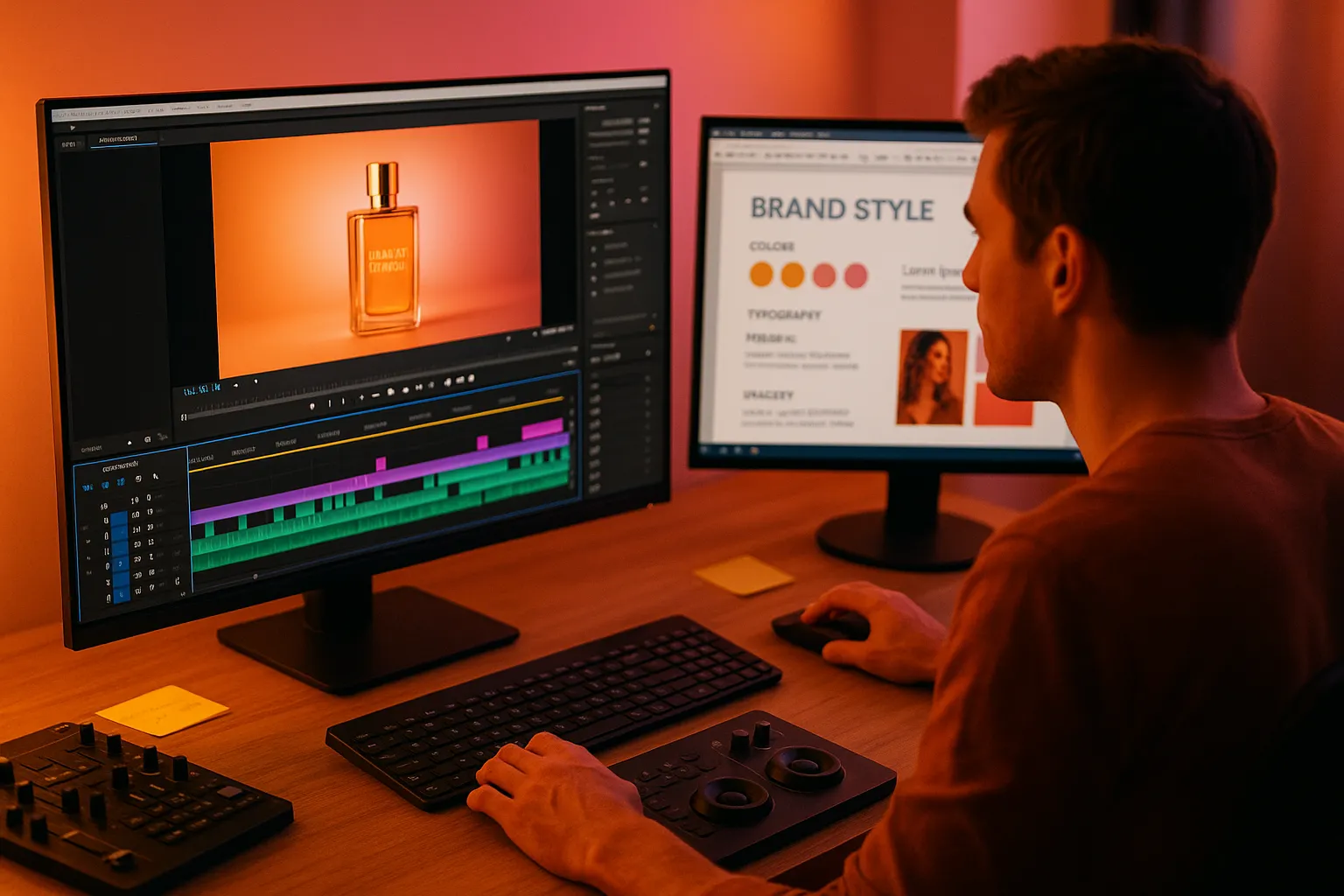
When people talk about “brand voice,” they think of copywriting or visual design elements - Yet in video, brand voice is expressed through editing. The editor’s touch is the invisible hand that gives a brand’s video content its recognizable personality. The way a video is cut is the difference between making a campaign feel sassy and sharp or authoritative and calm.
These behind-the-scenes choices determine whether viewers instantly recognize “oh, this is that brand”, and that consistency is not just aesthetic, but a foundation of trust. Video editors play a critical role in shaping brand voice across campaigns, ensuring that every cut, fade, and sound aligns with the personality the brand wants to convey.
Brand Voice in Video: Beyond Words and Logos
In video content, brand voice isn’t just the script or the tagline, it’s the whole viewing experience. A brand's style is expressed not just through its logos or slogans, but also through its visual presentation, motion graphics, and even the pacing and rhythm of its videos. Brand voice is the personality of the brand, and brand style as the audiovisual aesthetics that express that personality. For example, a quirky, youthful brand might have a breezy, informal voice in copy, and in video that could translate to quick cuts, playful music, and bright visuals. A luxury brand might speak with elegance in text, mirrored by slow, smooth transitions and polished, muted visuals in its films. The editor’s task is to take the brand’s core identity and infuse it into the edit itself. Your brand's personality shines through in video as a dynamic visual language. This style encompasses not just colors and fonts, but also the crucial details of edit pacing, animation style, and background music choices. Together, these create a cohesive identity on screen that is instantly recognizable as you.
Crucially, this means the role of the editor goes beyond technical assembly - it’s storytelling in a way that consistently reflects brand values. If the brand stands for innovation and boldness, does the video’s editing feel fast-paced and cutting-edge? If the brand prides itself on trust and warmth, are the transitions gentle and the music comforting? A well-defined brand voice and style guide can help here, outlining guidelines not only for writers and designers but for video editors too. A brand’s style guide might specify whether videos should use dynamic cuts or slow fades, what color grading or filters match the brand look, and what genre of music suits the brand’s. By adhering to these guidelines, editors ensure each piece of content “speaks” in the brand’s voice. When your video's voice and editing style are in perfect sync, every visual flicker, every beat of pacing, and every whisper of sound feels unmistakably on-brand.
How Editing Choices Shape Brand Personality
Let’s break down specific editing choices and how they influence brand perception. Every cut and effect carries meaning. By being deliberate with these choices, an editor can tactfully reinforce what the brand stands for:
-
Pacing and Rhythm: The pace of editing sets the emotional tone. Quick, snappy cuts create energy and excitement, Great for a bold, dynamic brand or an upbeat campaign. In contrast, slower pacing with longer shots can feel more contemplative or sincere, which might suit a premium or serious brand message. From a psychology standpoint, pacing has real effects on viewers’ engagement, academic papers on film editing notes that techniques like rhythmic cutting and timing can immerse viewers and even shape their emotional responses to the narrative. The editor is like a composer setting the tempo that audiences subconsciously associate with the brand’s personality.
-
Transitions and Visual Continuity: How one shot flows to the next is another subtle signal of brand voice. Abrupt jump cuts can feel edgy and direct; smooth dissolves or creative wipes might feel more gentle or artistic. Uniformity here is key. The goal is that viewers never get distracted by a weird effect that “doesn’t feel like us.” In fact, the best transitions often go unnoticed. Nike’s “You Can’t Stop Us” ad is an all timer here.
-
Shot Selection and Framing: Editors also influence brand voice by choosing what we see and how we see it. Do we mostly see the product in action, or the people using it? Are shots tightly focused or wide and airy? Editors work hand-in-hand with cinematographers on this; but in the editing room, there’s the shots you keep and the ones you discard. Over time, audiences start to sense these patterns. We all see clean white backgrounds and centered framing and can likely spot an Apple ad even before the logo appears, purely from how it’s shot and cut.
Editing is where brand voice becomes more than corporate words. It’s tone, personality, and feeling shaped through rhythm, sound, and color. Sharp editor weaves these elements together so everything feels intentional; on-brand without being on-the-nose. You don’t notice the editing, but you do feel it. It’s what makes a startup’s video genuinely funny instead of awkward, or gives a financial brand that steady, trustworthy vibe. When the edit clicks, the brand speaks clearly. When it doesn’t, the message gets lost in the noise.
Consistency Builds Trust (and Inconsistency Erodes It)
We know…you hear the word ‘consistency’ everywhere. But there’s a reason for it. A brand voice doesn’t really land until it shows up the same way, every time, everywhere. Imagine if a friend acted like a different person every time you saw them. You’d 100% stop trusting who they really are. Just like friends, audiences naturally gravitate toward brands that feel steady and familiar. Most consumers are more likely to engage with (and even pay a premium for) brands they trust. An oldie but a forever goodie is the Lucidpress study showing that maintaining a consistent brand presentation across all platforms can increase revenue by up to 23%.
It’s important to clarify that consistency doesn’t equate to a lack of evolution. It’s about coherence, not stagnation. Brands can and should refresh creative approaches over time; but the core voice should remain intelligible. If changes are needed, they should be gradual and deliberate. The key is to avoid a radical departure that breaks the trust built with your audience. Global brands have learned that lesson the hard way on occasion. Remember the uproar when the first Sonic the Hedgehog movie trailer dropped and Sonic looked… wrong? Fans weren’t just nitpicking, they were reacting to a break in brand voice. Sonic’s look had been consistent across games and shows for decades. That familiarity built trust. So when the trailer introduced a hyper-realistic, slightly creepy version, it triggered instant backlash. People were mad that a bright blue, sneaker-wearing cartoon hedgehog didn’t feel “realistic”; and if that’s not brand voice, what is? It’s a perfect reminder: evolve your creative approach slowly, with intention, and audiences will roll with it. Just ask Mickey Mouse.
Keeping Editors Aligned: Practical Tips for Consistency
Ensuring consistency in brand voice across videos is as much about process and teamwork as it is about individual creativity. Here are some tactical ways creative directors and post-production leads can help their editor teams (internal OR external) stay on the same page:
-
Establish Clear Editing Guidelines: Just as brands have style guides for fonts and tone-of-copy, it’s wise to have a video style guide. This might include approved color Look-Up Tables or filters that define the color grading, guidance on pacing, transition preferences (e.g. “use straight cuts or gentle dissolves – no gimmicky wipes”), and graphic styles for titles or captions, preferably specific fonts. It can also outline the preferred framing or composition standards. By documenting these, you give editors a reference to check their work against. New editors ramp up faster, and everyone speaks the same visual language.
-
Use Branded Templates and Assets: To streamline consistency, create ready-to-use assets that encode your brand voice. This includes branded intro and outro segments, lower-third graphics for names or titles, watermark logos, and even a library of licensed music that fits your brand mood. Ensure all videos use the same style of subtitles/captions: same font, color, and placement. Serious brands package these elements so an editor can drag-and-drop them into any new project. It removes guesswork (e.g., a freelancer doesn’t have to wonder how to display your logo – they have the official animation ready). Over time, viewers come to expect, say, that signature 2-second jingle or the quick logo reveal at the end, that’s just your brand voice.
-
Maintain Audio Consistency: Just like visuals, your brand should sound like itself every time. Start by picking a family of music tracks that reflect your tone—maybe it’s a recognizable theme song, or maybe it’s always upbeat acoustic or clean electronic. If you work with composers, consider creating a sonic logo or recurring motif. Even without one, editors should stick to a consistent genre or mood across videos to build familiarity. Voiceover should follow suit. If your brand is casual and friendly, make sure your VO talent sounds that way too—no sudden switch to a dramatic movie trailer voice. Some brands go as far as using the same person in every video to become the voice of the brand. At a minimum, give clear guidance here. Sound effects should be purposeful and subtle. If you use a swoosh for transitions, consider using the same effect across other videos to create a consistent audio signature. Don’t forget the technical side: consistent volume levels, clean voiceovers, balanced mixes. Audio quality slips are one of the fastest ways to break viewer immersion, and trust.
By putting these practices in place, you’re building out your brand voice. Even when different people touch the work, the final product still feels cohesive. Big agencies already do this at scale - global brands can hand out detailed brand and editing guidelines so a spot cut in Brazil still feels like it came from the same world as one made in the UK.
On a smaller scale, the same logic applies. Prioritizing consistency early on saves you from painful do-overs later, like scrapping a video that went off-script stylistically. It also makes scaling way smoother. When editors have a clear framework, they can move faster and with more autonomy. The upfront investment in alignment pays off in speed, trust, and a brand voice that stays intact.
Wrap Up
Video editors might not always get the spotlight like directors or on-screen talent, but their impact on brand voice runs deep. Every cut, fade, transition, and sound mix shapes how your audience feels about your brand. Is it playful or sincere? Modern or classic? A huge part of that perception is crafted in the edit.
A great editor doesn’t just follow instructions - they internalize the brand’s voice and make sure every frame speaks in that language. When multiple editors across different projects do this well, the result is a unified chorus of content. Each video might sing a different tune, but they all sound unmistakably like you. And that kind of consistency builds familiarity, which builds trust.